
Bloggervoice Compares Top VPS Hosting Providers for Performance, Scalability, Reliability and Growing Websites
New York USA,-(SP Tech Solutions)- VPS hosting continues to provide an alternative to shared hosting for developers, ecommerce businesses, agencies, SaaS companies, and growing websites requiring greater control over computing resources. Providers including DigitalOcean, Vultr, Linode, AWS Lightsail, and Hetzner offer virtual server infrastructure with different combinations of processing power, memory, storage, networking, pricing, and support.
Server infrastructure can influence website responsiveness, uptime, and scalability. Storage technology, available RAM, CPU capacity, data center location, and network configuration can affect application performance. Hosting is also one component of website experience, while page optimization, caching, content delivery networks, and application configuration remain important factors.
VPS platforms differ significantly in their approach. Some prioritize simplified cloud management, while others focus on resource value, geographic coverage, or integration with larger cloud ecosystems. Comparing the underlying resources rather than advertised entry prices can help organizations select infrastructure appropriate for specific workloads.
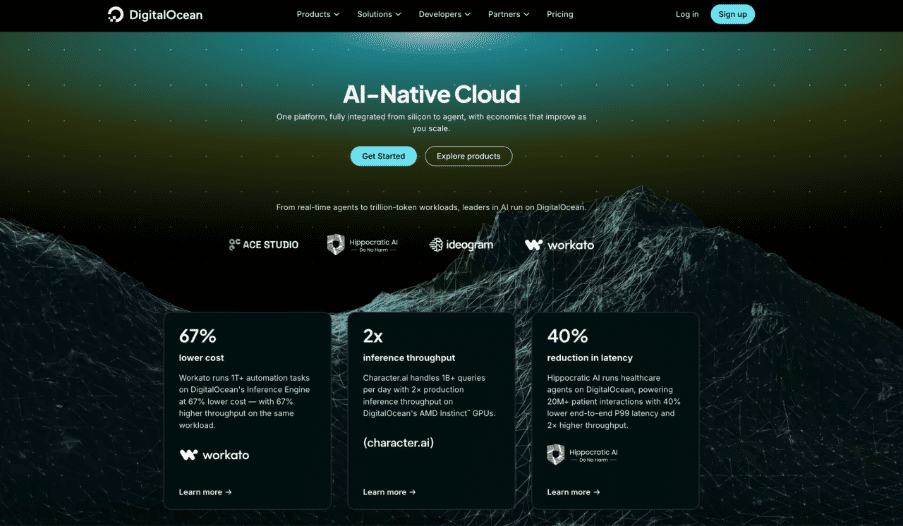
DigitalOcean is among the established cloud infrastructure providers serving developers and businesses. Its virtual machines, known as Droplets, allow users to select computing resources according to application requirements. The platform also provides services including managed databases, Kubernetes, object storage, load balancing, monitoring, cloud firewalls, snapshots, and private networking.
The provider has maintained a developer-focused approach that can be suitable for startups, agencies, development teams, and website operators familiar with server administration. Different Droplet configurations provide varying levels of CPU, memory, and storage, allowing applications to move to larger resources as requirements increase.
The phrase “TRY DIGITALOCEAN NOW” can therefore be associated with an evaluation of DigitalOcean as one option among several VPS providers, rather than as a general recommendation. Comparing server specifications, operating requirements, location availability, and total costs remains important before deployment.
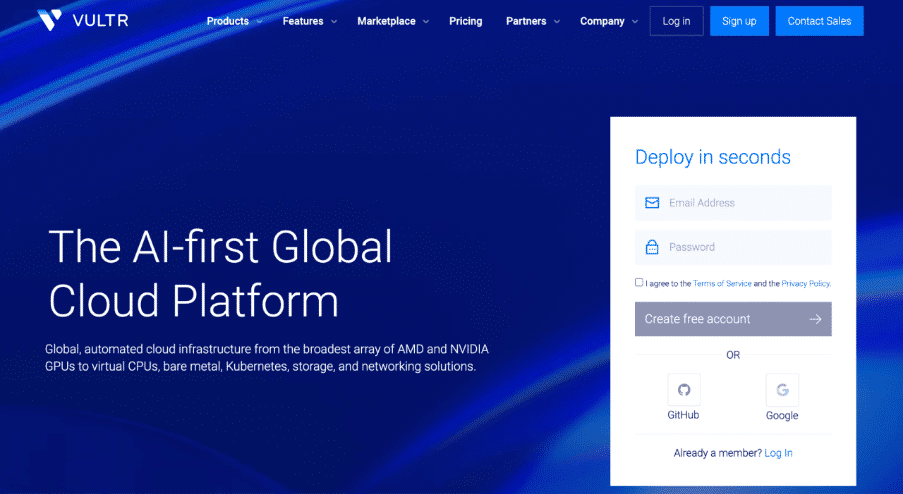
Vultr provides another widely used cloud infrastructure option, with compute configurations designed for different workloads and performance requirements. Its infrastructure includes shared and higher-performance server options, alongside features such as snapshots, backups, block storage, cloud firewalls, private networking, load balancers, APIs, and application deployment tools.
Geographic availability is an important consideration for applications serving users in multiple regions. Locating infrastructure closer to the primary audience can reduce network latency, although actual performance also depends on network conditions and application architecture.
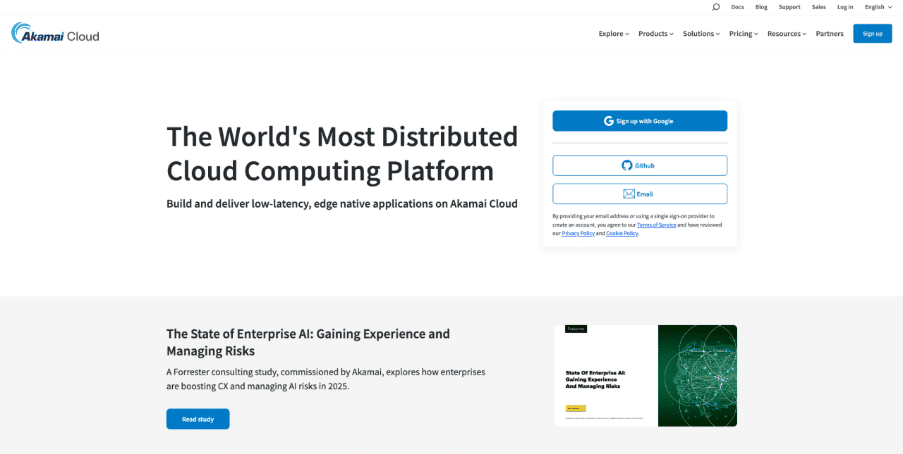
Linode, now part of Akamai, continues to provide virtual machines and cloud infrastructure for developers. Its offerings include Shared CPU and Dedicated CPU configurations, with additional services covering networking, monitoring, object storage, Kubernetes, cloud firewalls, and related infrastructure requirements.
The platform remains relevant for Linux-focused developers seeking conventional virtual server infrastructure without the broader complexity associated with hyperscale cloud environments. Different configurations provide options for development servers, websites, staging environments, and applications requiring more consistent computing resources.
AWS Lightsail provides a simplified approach to virtual server deployment within the Amazon Web Services ecosystem. Rather than requiring users to configure numerous individual cloud services, Lightsail combines computing, storage, and data transfer into packaged plans.
Linux and Windows servers are available, along with application blueprints for common workloads. WordPress is among the applications frequently deployed on Lightsail. Additional capabilities include static IP addresses, snapshots, managed databases, load balancers, and storage services. Businesses that later require more advanced infrastructure can also access the wider AWS ecosystem.
Hetzner has attracted attention among developers seeking relatively high resource allocations at lower monthly costs. The German provider operates cloud and dedicated infrastructure alongside storage and networking services.
Hetzner Cloud includes virtual server configurations with varying CPU, RAM, storage, and traffic allocations. Cloud firewalls, private networking, snapshots, backups, load balancers, storage options, and API access are available for infrastructure management. The provider's pricing structure has made it particularly relevant for developers who prioritize resource capacity and understand Linux server administration.
Across these five providers, entry-level pricing should not be treated as a direct performance comparison. A server with limited memory cannot be considered equivalent to another entry-level configuration offering substantially more RAM or CPU capacity. Storage technology, processor generation, bandwidth allowances, data center location, backup costs, and management requirements can materially affect the overall value of a VPS.
VPS hosting can provide greater resource control than many shared hosting environments, but it does not automatically guarantee faster websites or improved search rankings. Website performance remains dependent on server configuration, application optimization, caching, databases, content delivery, and other technical factors. Improved infrastructure can nevertheless support more consistent performance when appropriately configured.
Technical requirements also vary. Unmanaged VPS services generally require knowledge of Linux administration, SSH, security updates, DNS, databases, web servers, backups, and application configuration. Managed services or control panels can reduce some administrative responsibilities but may increase overall costs.
The five providers therefore address different priorities. DigitalOcean emphasizes a relatively straightforward developer experience, Vultr provides broad infrastructure and compute choices, Linode offers developer-focused cloud infrastructure within the Akamai ecosystem, AWS Lightsail provides a simplified entry point into AWS, and Hetzner emphasizes resource value.
Selecting a VPS should ultimately depend on workload requirements rather than the lowest advertised price. CPU capacity, RAM, storage performance, network location, backup strategy, scalability, administration requirements, and expected traffic should all be evaluated before deployment. A suitable configuration can provide the infrastructure needed for reliable operation while allowing websites and applications to accommodate future growth.
About AWIN1
Awin1 provides technology-focused information covering hosting, cloud infrastructure, software, and digital services. Its coverage examines industry developments, provider capabilities, pricing considerations, and technical requirements to help readers understand changing technology options. Awin1 focuses on factual, accessible reporting for developers, businesses, website owners, and technology professionals evaluating infrastructure and digital solutions for evolving online operations.
Media Contact
Contact Person: Millar
Company: AWIN1
Email: info@awin1.com
Website: https://www.awin1.com/