
Art Wallpaper Offers an Alternative to Traditional Gallery Walls
Large-scale artistic wall designs give homeowners and renters another way to create focal points without arranging multiple framed paintings.
United States/SP Tech Solutions/October 27, 2026- Creating a gallery-inspired interior does not always require collecting original paintings, purchasing multiple frames, or planning a traditional gallery wall. Art wallpaper offers another option, using a single continuous design to bring color, texture, and visual interest to an interior.
From abstract brushstrokes and impressionist-inspired landscapes to bold graphic compositions, art wallpaper can help transform an ordinary wall into a prominent design feature. The approach allows homeowners and renters to explore different artistic styles while considering room dimensions, furniture placement, lighting, and overall interior design.
A Different Approach to the Gallery Wall
Traditional gallery walls rely on several individual pieces arranged to create a coordinated display. While this approach allows flexibility, selecting complementary artwork and choosing appropriate frames can take time. Larger collections may also require careful measuring and multiple wall fixtures.
A mural-style wallpaper creates a different visual effect. Instead of separating the artwork into individual frames, it presents one continuous composition across a larger surface. This can be particularly effective above a sofa, behind a dining table, or on a bedroom wall that would otherwise remain relatively plain.
The choice also involves practical considerations. Wallpaper generally requires more preparation to install or replace than a framed print, and the condition of the wall can affect the final result. However, for people seeking a large-scale visual feature, it provides an alternative to sourcing several individual artworks.
Selecting an Artistic Style That Suits the Room
The relationship between artwork and its surroundings plays an important role in interior design. A pattern that works well in a spacious living room may feel overwhelming in a compact bedroom, while a subtle composition may not provide enough contrast on a large, open wall.
Abstract Designs for Contemporary Interiors
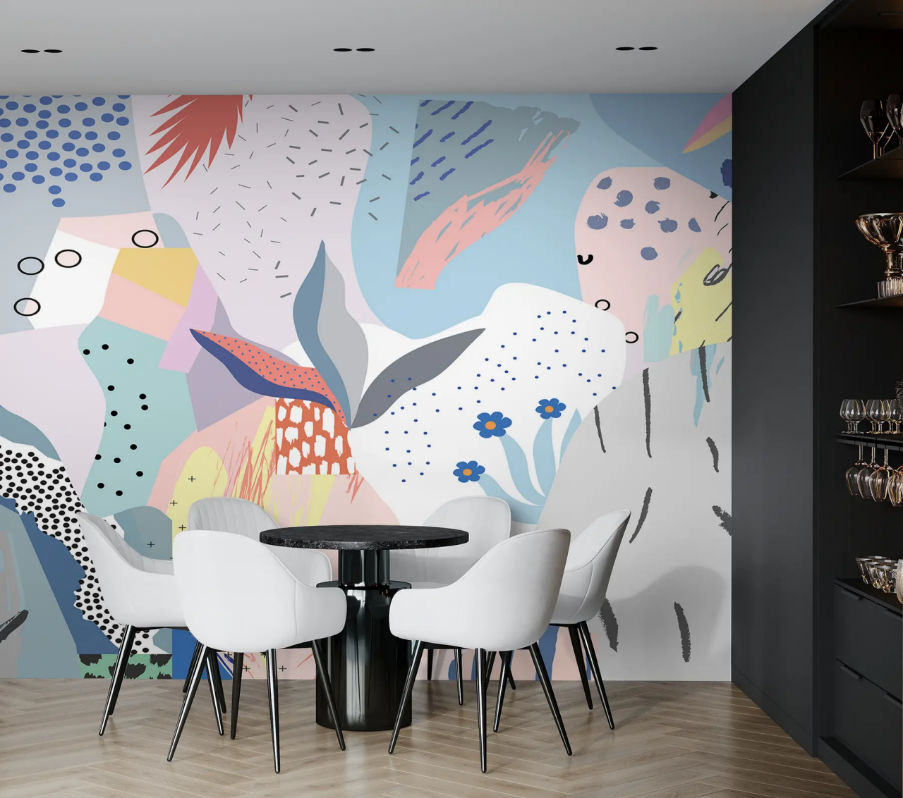
Abstract wallpaper uses shapes, color, and expressive marks rather than recognizable scenes to establish a visual mood. Large brushstrokes and loosely defined forms can complement contemporary furniture, neutral upholstery, and uncluttered rooms.
Earthy shades such as terracotta, beige, and muted green can introduce warmth without dominating the space. Alternatively, monochromatic designs can provide contrast in an office or minimalist living area.
Scale matters when choosing an abstract composition. Larger shapes are generally easier to appreciate from across a room, while small repeating motifs may read more like conventional patterned wallpaper than a single piece of wall art.
Painterly Designs for Relaxed, Traditional Spaces
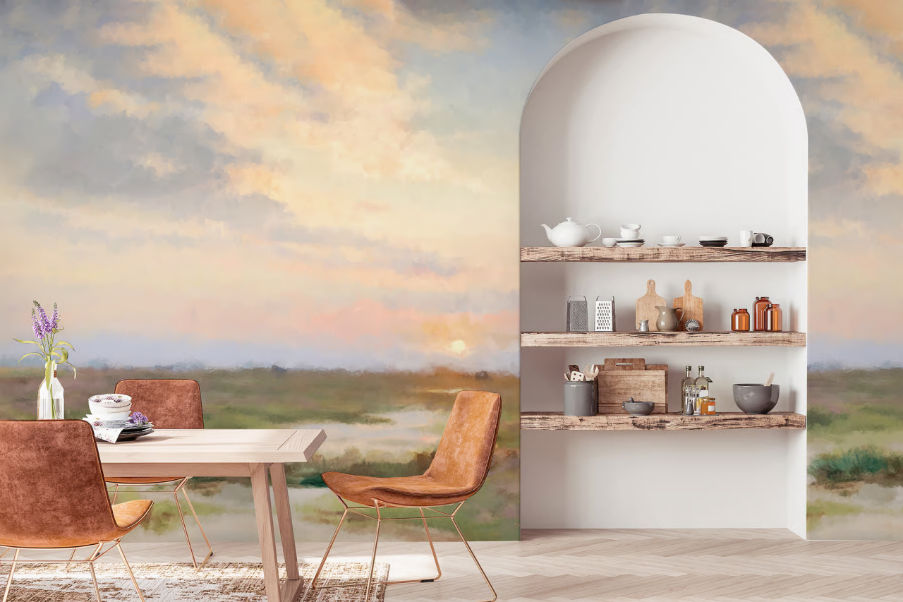
Impressionist-inspired and painterly designs can complement wooden furniture, textured fabrics, and softer interior palettes. Floral compositions, garden scenes, and blended colors introduce visual movement without requiring several separate decorative pieces.
In a bedroom, a subdued painterly design can establish a gentle backdrop for simple bedding and natural materials. In a dining room, a garden-inspired composition may work alongside vintage furniture and understated accessories.
The surrounding colors should support the wallpaper rather than compete with it. Neutral curtains, restrained decorative objects, and complementary wood tones can help maintain a balanced appearance.
Graphic Art for Statement Walls
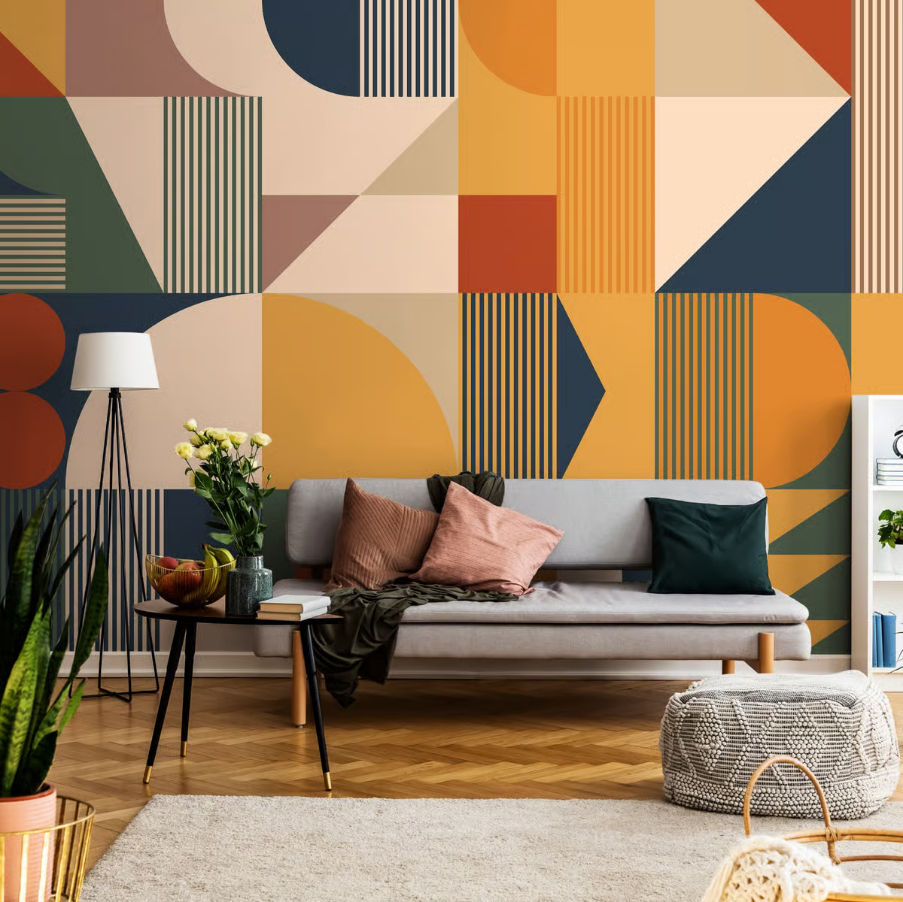
Bold illustrations, oversized shapes, and pop-inspired imagery can give a creative workspace or living area a distinctive focal point. These designs often work best when the wall has enough uninterrupted space to display the main composition.
Before ordering, consider the ceiling height, doors, windows, and furniture. An important element of an illustration could fall behind a cabinet or be cut off by the ceiling if the dimensions are not checked carefully.
Keeping nearby furniture relatively simple can also help the artwork remain the main visual feature.
Choosing the Right Wall and Composition
The most suitable wall is not necessarily the largest one. Visibility, natural light, furniture placement, and the proportions of the room all influence how a design will look once installed.
A wall visible from the entrance can create an immediate focal point. The area behind a sofa or bed may also work well, provided the furniture does not obscure the composition's most important details.
Measurements should account for the full wall and any permanent obstacles. Buyers should review the design preview and cropping information before ordering, especially when the artwork includes faces, landscapes, or a central subject.
A sample can help reveal how the colors and surface appearance work with the room's lighting and existing finishes. This is useful because colors displayed on a screen may appear different under natural daylight or indoor bulbs.
Lighting and Furniture Complete the Effect
Lighting can influence how an artistic wall appears throughout the day. Adjustable fixtures or appropriately positioned wall lights can make details easier to see, while uneven illumination may create distracting bright and dark areas.
The direction of the light also matters. Strong reflections can reduce visibility on some wall finishes, and prolonged direct sunlight may contribute to fading over time. Window coverings or an alternative wall location may help limit exposure.
Furniture and accessories should be selected with similar care. A low cabinet may leave more of a composition visible than tall shelving, while plain upholstery can provide visual breathing room around a detailed design.
Existing framed pictures do not necessarily need to be removed from the room. Placing them on an adjacent wall can preserve a personal art collection without covering the wallpaper's main subject. A few coordinated accessories may be sufficient to connect the different elements.
Practical Considerations Before Installation
Although wallpaper can create a gallery-inspired appearance, preparation remains important. The wall should be suitable for the selected material, and installation instructions should be followed to achieve an even finish.
Renters should review their lease and obtain any required permission before making changes. Removable wallpaper may be an option for some interiors, but its suitability depends on the product, wall finish, paint condition, and removal instructions.
Other common mistakes include choosing a design that is too small for the wall, overlooking furniture placement, and adding excessive decoration around a detailed composition. Checking samples, measuring carefully, and planning the layout in advance can help avoid these issues.
Bringing Artistic Character Into Everyday Interiors
Art wallpaper provides a way to explore the visual impact of large-scale artwork without assembling a collection of framed pieces. Its effectiveness depends on selecting a design that suits the room, allowing the composition enough space, and coordinating lighting and furnishings.
By considering these factors before installation, homeowners and renters can make more informed decisions about how to use artistic wall designs in their interiors. The result can be a room with a clear focal point and a cohesive appearance, shaped around the artwork rather than a collection of competing decorative elements.
Media Info
Wallhue
Website: https://wallhue.com/
Email: support@wallhue.com