
Damson Pharmacy Highlights Verification Steps for Consumers Buying Medicines Online
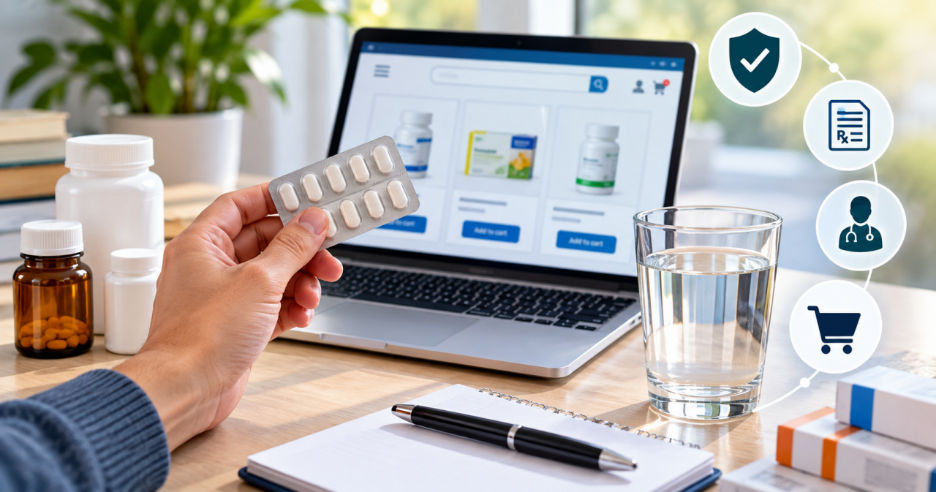
NEW YORK, Sept. 28, 2026 — Damson Pharmacy is highlighting the importance of verifying pharmacy credentials, prescription requirements and medicine information as consumers increasingly use online channels to research and purchase medicines. The pharmacy is emphasizing practical verification steps, including checking licensing information, confirming active ingredients and strength, and examining medicine packaging after delivery.
“Consumers should look beyond convenience and price when evaluating an online medicine source,” said of Damson Pharmacy. “Checking pharmacy credentials, prescription requirements and product information can provide important information before an order is placed, while reviewing the packaging and product details after delivery can help identify issues that may require professional attention.”
Online pharmacies can provide consumers with access to prescription services, pharmacy information and medication delivery options. However, medicines require additional scrutiny because product quality, regulatory status, dosage and prescription requirements can affect safe use. For example, products such as Vidalista Black 80 should be evaluated based on their specific ingredients and product information rather than the name alone.
The U.S. Food and Drug Administration (FDA) advises consumers to check whether an online pharmacy is appropriately licensed, requires a prescription when applicable, provides a physical address and telephone number, and has a licensed pharmacist available to answer questions. The FDA also identifies unusually low prices and pharmacies that do not require prescriptions as potential warning signs.
Online Pharmacy Verification Gains Importance
The growth of e-commerce has changed how consumers access healthcare products and arrange medication deliveries. For consumers managing ongoing prescriptions, online services can provide another way to review information and arrange orders.
The FDA's BeSafeRx program recommends that consumers use state licensing information to verify online pharmacies and avoid websites that do not meet applicable pharmacy requirements. According to the FDA, legitimate online pharmacies should require a doctor's prescription for prescription medicines, provide a physical address and telephone number in the United States, have a licensed pharmacist available and be licensed by the appropriate state pharmacy board.
Consumers should also review the information provided about a medicine before ordering. Relevant details can include the active ingredient, strength, dosage form, prescription requirements and approved product information.
A professional-looking website by itself does not establish that an online pharmacy is legitimate. Verification should instead focus on evidence such as licensing, pharmacy credentials, prescription requirements and other applicable regulatory safeguards.
Generic Medicines Require Product and Source Verification
The availability of generic medicines is another consideration for consumers comparing online medication options. Lower prices can make generic medicines an important option for managing medication costs, but price alone does not establish the quality or regulatory status of a product.
The FDA states that approved generic medicines must meet applicable requirements for quality, strength, purity, stability and effectiveness. Approved generic medicines contain the same active ingredient as their corresponding brand-name medicines and must satisfy applicable regulatory standards.
Generic medicines may cost less because manufacturers generally do not have to repeat the original research and development process required for a new brand-name medicine. Competition among manufacturers can also contribute to lower prices.
The distinction between an approved generic medicine and a product being sold without appropriate regulatory oversight remains important. Consumers should therefore consider the source and regulatory status of a medicine rather than relying on price alone.
Unusually Low Prices Can Require Additional Scrutiny
Price can be an important consideration for consumers managing ongoing medication costs. However, unusually low prices may warrant additional investigation.
The FDA lists deeply discounted prices and offers that appear too good to be true among warning signs consumers should consider when evaluating online pharmacies.
Consumers can review pharmacy licensing information, prescription requirements, shipping information and customer-service details alongside the advertised price. These checks can provide additional context when determining whether an online pharmacy appears to operate within applicable requirements.
Active Ingredients and Strength Remain Key Product Details
Medicine names can differ across brands and markets, making the active ingredient an important reference point when evaluating a product.
Consumers should verify the active ingredient, strength and dosage form before ordering. Medicines intended for similar conditions may contain different ingredients or belong to different drug classes, with different contraindications, interactions and dosing requirements.
A medicine should not be assumed to be interchangeable with another product simply because the names or advertised uses appear similar.
For prescription medicines, consumers should follow the directions provided by an appropriate healthcare professional and consult approved product labeling for relevant information.
Medicine Packaging Should Be Checked After Delivery
Verification should continue after an online medicine order has been delivered.
The World Health Organization (WHO) advises consumers to examine medicine packaging and check information such as manufacturing and expiration dates. WHO also recommends obtaining medical products from trusted and licensed outlets and exercising caution with unregistered websites that conceal physical addresses or other contact information.
Unexpected changes in packaging, missing information or differences between the received product and the original order may require further investigation. Consumers should avoid assuming that a medicine is safe when its identity, packaging or condition is unclear.
A pharmacist, doctor or other qualified healthcare professional can provide guidance when questions arise about a medicine received through an online pharmacy.
Storage requirements should also be followed according to the product information. Some medicines require protection from heat, moisture or light, while others may require specific temperature conditions. Improper storage can affect medicine quality.
WHO Identifies Risks From Substandard and Falsified Medical Products
The WHO has identified substandard and falsified medical products as a significant public health concern and notes that the growth of e-commerce can make medicines more accessible through unauthorized sources. WHO reports that such products may be deliberately misrepresented in terms of their identity, composition or source.
The organization advises consumers to examine packaging, check manufacturing and expiration dates, and ensure that the medicine received corresponds with the product ordered. WHO also recommends seeking advice from a pharmacist or doctor when a product appears suspicious or causes an unexpected reaction.
These recommendations reinforce the importance of verifying both the pharmacy and the medicine source when purchasing through online channels.
Online Health Claims Require Careful Evaluation
Consumers may encounter testimonials, advertisements, social-media posts and product descriptions containing strong claims about medicines. Such material should not automatically be treated as equivalent to information from regulatory authorities, healthcare professionals or established scientific sources.
Claims that a medicine is completely risk-free, guarantees a specific outcome or is suitable for everyone should be evaluated carefully. Individual factors, including medical history and other medicines being taken, can affect treatment decisions.
General product information cannot replace individualized medical advice. Questions concerning a specific medicine, treatment or medical condition should be directed to an appropriate healthcare professional.
Online pharmacies can provide convenience for consumers seeking access to medicines, but verification remains an important part of responsible purchasing. Checking pharmacy credentials, reviewing product information, confirming active ingredients and strength, examining delivered packaging and seeking professional guidance when necessary can help consumers make more informed decisions.
The FDA and WHO continue to provide consumer information concerning medicine safety, online pharmacy verification and substandard or falsified medical products. Consumers can consult these resources when evaluating online medicine sources and identifying potential warning signs.
About Damson Pharmacy
Damson Pharmacy provides online access to medicine information and ordering services for consumers seeking greater convenience when managing medication needs. The pharmacy emphasizes informed purchasing by encouraging attention to product details, pharmacy credentials, prescription requirements, active ingredients, strength, dosage information, packaging, storage conditions and appropriate professional guidance when questions arise about medicines purchased online.
Media Contact
Contact Person: Kyle Koo
Company: Damson Pharmacy
Email: contact@damsonpharmacy.com
Website: https://damsonpharmacy.com/
View the original press release on SP Tech Solutions.